You cannot buy a domain name permanently in the traditional DNS sense. Registrars lease domains for up to 10 years at a time under ICANN rules, and you must keep renewing to hold onto the name. The closest you can get is a 10-year registration paired with auto-renewal, WHOIS privacy, and a registrar lock. Blockchain domains offer a genuine one-time-fee alternative, but they work differently from standard web addresses and require extra steps to access in most browsers. Pairing those steps with a strong, unique password on your registrar account rounds out the core protection.
Why You Can’t Buy a Domain Name Permanently (and What ‘Permanent’ Really Means)
Domain names under the traditional DNS (Domain Name System) are not property you purchase outright. They are leases. ICANN, the nonprofit body that coordinates global internet naming, sets the rules for every accredited registrar, and those rules cap a single registration term at 10 years. No registrar can legally sell you a.com,.net,.org, or most other standard extensions for longer than that, regardless of what any marketing copy implies.
When you register a domain, you are paying for the exclusive right to use that name for the period you choose. Once that period ends, the name returns to the available pool unless you renew. Miss the renewal window and you can lose a name you have built a brand around, sometimes within days.
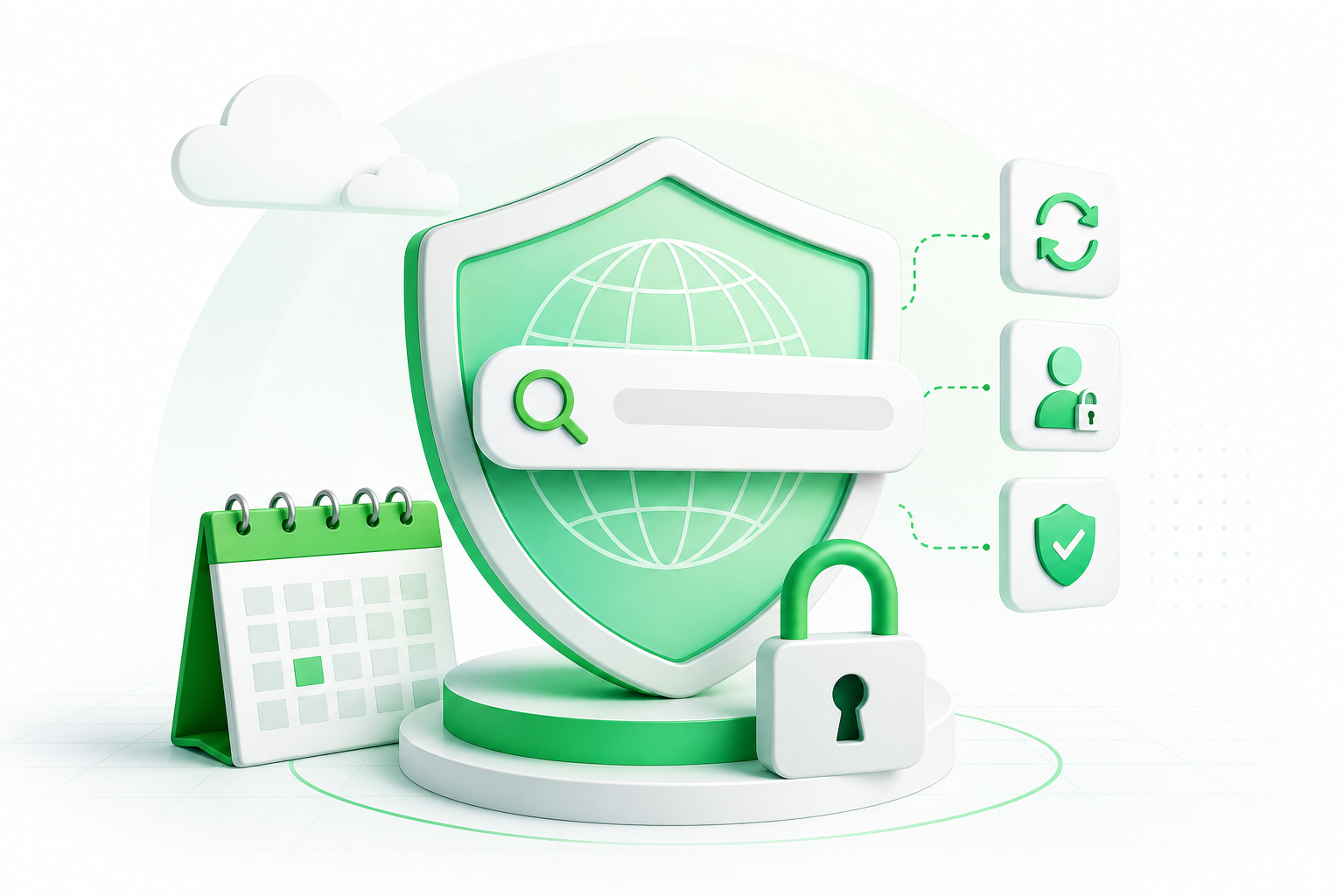
The word "permanent" gets used loosely in searches and forums, but what most people actually want is continuous, uninterrupted control. That is achievable. A 10-year registration with auto-renewal turned on gets you a decade of protection before you need to act again. Combine that with a registrar lock and WHOIS privacy, and you have covered the main ways a domain gets lost or stolen.
One more thing worth understanding: trademark law does not automatically protect your domain. According to WIPO's 2026 report, trademark holders filed 6,282 complaints under the Uniform Domain Name Dispute Resolution Policy (UDRP) in 2025, a record high for the organization. If your domain name resembles a registered trademark, a complaint could put your registration at risk even if you registered it in good faith. Choosing a distinctive, original name from the start is the simplest way to avoid that exposure.
The bottom line: "permanent" domain ownership under DNS is a myth, but long-term, secure control is very much real. The steps below show you exactly how to get there.
How to Buy a Domain Name and Lock It Down for the Long Term
Buying a domain the right way takes about 20 minutes. Doing it carelessly can cost you the name years later. Follow these steps in order.
Brainstorm a short, memorable name that aligns with your brand and avoids hyphens or numbers. Hyphens are easy to mistype and numbers create confusion when someone hears your name spoken aloud. Aim for something under 15 characters if possible. Check that no registered trademark closely matches your chosen name before you go any further.
Select a registrar accredited by ICANN and check for transparent renewal pricing. The registration price a registrar advertises is often an introductory rate. The renewal price, which you will pay every year or every few years after that, can be significantly higher. Read the renewal terms before you commit. Two well-regarded options at this step are Cloudflare Registrar and Namecheap. Cloudflare Registrar sells domains at wholesale cost with no markup and no renewal price increases, per cloudflare.com. Namecheap includes free WHOIS privacy and has a straightforward interface, though its introductory prices may be lower than what you pay at renewal, per hostingguider.com and forbes.com. Both are ICANN-accredited.
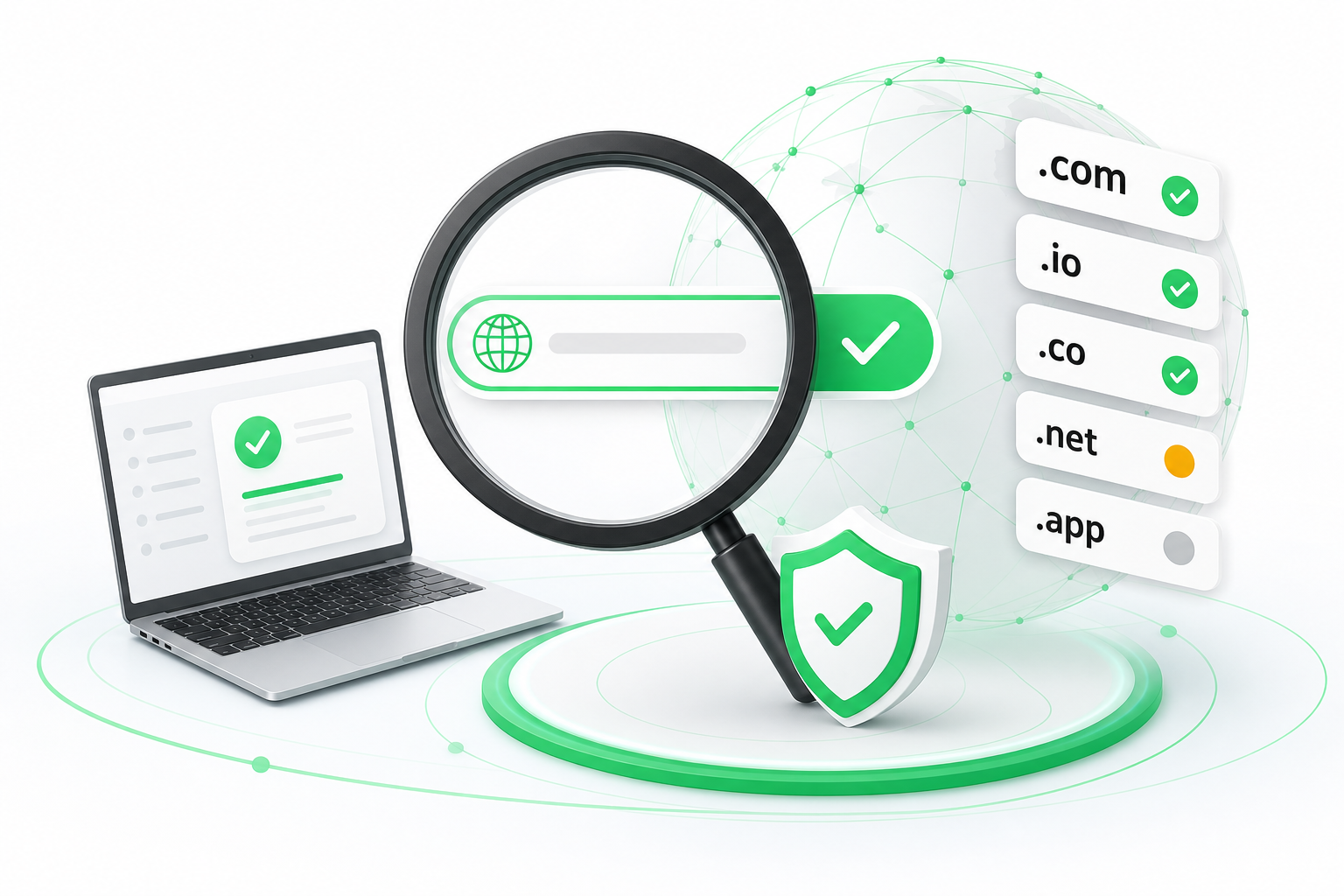
Use an availability checker to see if your chosen name and extension are available. Most registrar homepages have a search bar for this. If your first choice is taken, try a different extension (.net,.co,.io) or rework the name slightly rather than adding hyphens to force it through. Avoid buying a name that is one character off from a major brand.
Choose a registration duration, typically between 1 and 10 years. If you are serious about keeping the name, select the longest term your budget allows. A 10-year registration means fewer renewal touchpoints and less risk of an accidental lapse. The next section covers this decision in more detail.
Add WHOIS privacy protection to hide your personal contact details from public databases. WHOIS is a public directory of domain registrant information. Without privacy protection, your name, email, and address are visible to anyone who looks up your domain. Some registrars include this free; others charge extra. Confirm the status before checkout.
Verify your ownership by responding to the mandatory ICANN verification email within 15 days. ICANN requires registrars to verify the registrant's email address after a new registration or contact update. If you ignore this email, your domain can be suspended. Check your spam folder if you do not see it within a few hours of registering.
Enable auto-renewal to ensure the domain does not expire accidentally. Set this immediately after purchase, not later. Pair it with a payment method that will not expire before your next renewal date, and keep your billing email address current. A lapsed credit card is one of the most common reasons people lose domains they intended to keep.
If you want to explore registering a domain without hidden fees before committing to a paid plan, the guide on registering a domain name free without hidden fees walks through what to watch for.
Should I Buy My Domain for 10 Years?
For most people with a serious project, yes. A 10-year registration is the single most effective structural step you can take toward long-term domain security. It reduces the number of renewal events where something can go wrong, and it signals to yourself and your team that this name is not temporary.
The cost argument is straightforward. Paying for a decade upfront costs more in one transaction, but the per-year price is usually the same as or lower than paying annually. You are not saving money by renewing year to year; you are just spreading the same total cost across more transactions, each of which is a chance to miss a payment.
Buy 10 years because it protects your name, not because you expect a rankings boost.
When does a shorter term make sense? If you are testing a project name and are not sure it will stick, a one or two-year registration keeps your options open. There is no penalty for registering for a short period, as long as you stay on top of renewals.
One practical note: premium domains, those short, high-traffic names that sell at elevated prices, sometimes come with higher annual renewal costs as well. Confirm the renewal rate for any premium-labeled domain before you buy, since the ongoing cost can be much higher than a standard registration.
Security Measures That Keep Your Domain Safe After Purchase
Registering a domain is only the first step. The real work is making sure you keep it. Theft, accidental expiry, and bad-faith legal challenges are all real risks, and each one has a specific countermeasure.
Enable registrar lock. Most registrars offer a feature called a registrar lock (sometimes called domain lock or transfer lock). When it is active, your domain cannot be transferred to another registrar or have its nameservers changed without you first unlocking it. Turn this on immediately after purchase and only disable it when you are intentionally initiating a transfer.
Keep WHOIS privacy active. If you completed step 5 in the purchase process, your personal contact details are already hidden from the public WHOIS directory. Check that this protection renews alongside your domain. Some registrars include it free for the first year and then charge for it at renewal. A lapse in WHOIS privacy exposes your email address to spammers and, more seriously, to anyone researching your domain for a potential dispute.
Set auto-renewal and guard your payment method. Auto-renewal only works if the payment method attached to your account is valid. Review your billing details at least once a year. Set a calendar reminder 60 days before your domain's expiry date as a backup check, separate from auto-renewal. If your registrar sends expiry notices, make sure those emails do not land in spam.
Understand Reverse Domain Name Hijacking. ICANN's dispute resolution process, the UDRP (Uniform Domain Name Dispute Resolution Policy), allows trademark holders to challenge domain registrations they believe infringe their marks. Most challenges are legitimate, but some are not. Reverse Domain Name Hijacking refers to bad-faith attempts by trademark holders to seize a legitimately registered domain through the UDRP process. According to GigaLaw, Reverse Domain Name Hijacking findings occurred in just 1.3 percent of UDRP decisions globally during the second quarter of 2025. That percentage is small, but if your domain has commercial value, the risk is real. Keep records of why you chose your domain name and any correspondence related to it. Documentation helps if you ever need to defend your registration.
WIPO recorded 6,282 UDRP complaints in 2025, a record high. High-value, short, or keyword-rich domains attract more scrutiny. The best protection is choosing a name that is genuinely distinctive and does not overlap with a known trademark.
Can You Buy a Domain Name Permanently Without Yearly Fees? Blockchain Domains Explained
Blockchain domains are the only current option that comes close to true permanent ownership. Instead of leasing a name from a registrar under ICANN rules, you mint a domain as an NFT (non-fungible token) on a blockchain. You own the token; no annual renewal is required.
Unstoppable Domains is one of the main platforms offering this model. It issues blockchain-based domains, extensions like.crypto,.nft,.wallet, and others, as NFT tokens with a one-time purchase fee and no recurring renewal costs, per unstoppable.ai. Once you buy the domain, it is yours for as long as you hold the token.
That sounds ideal, but there are important limitations to understand before you switch.
Standard browsers do not resolve blockchain domains by default. To visit a site hosted on an Unstoppable Domains address, a user typically needs a browser extension or must go through a compatible gateway. This is not a minor footnote. If you are building a site that needs to be reachable by anyone typing a URL into Chrome or Safari, a blockchain domain alone will not get you there, per docs.unstoppabledomains.com.
There is also a name collision risk. Some blockchain domain extensions overlap with extensions that ICANN has assigned or is considering for traditional DNS. If ICANN later activates an extension that a blockchain platform already uses, conflicts can arise.
The ENS (Ethereum Name Service) model, which uses the.eth extension, is another blockchain naming option worth knowing about.
The practical decision comes down to your use case. If you want a domain for a crypto wallet address, a Web3 project, or a decentralized application, a blockchain domain makes sense and the one-time fee model is a practical option. If you need a public-facing website that anyone can reach without special software, a traditional DNS domain registered for 10 years with auto-renewal is still the more reliable path.
Where to Buy a Domain Name: Choosing the Best Registrar for Your Needs
The best registrar depends on what you prioritize: price transparency, privacy, or a non-traditional ownership model. The table below maps the three options covered in this guide to the situations where each fits best.
| Registrar | Renewal Model | WHOIS Privacy | Best For |
|---|---|---|---|
| Cloudflare Registrar | At-cost, no markup, no renewal price increases | Included | Users who want predictable long-term costs and are comfortable using Cloudflare as their DNS provider; note that Cloudflare Registrar does not support internationalized domain names (IDNs), per cloudflare.com |
| Unstoppable Domains | One-time fee, no renewals | N/A (blockchain ownership) | Web3 projects, crypto wallet addresses, and users who want no recurring fees; requires browser extensions or gateways for standard access, per unstoppable.ai |
| Namecheap | Competitive annual renewal; introductory rates may be lower than renewal rates | Included free | Beginners who want a straightforward interface and free WHOIS privacy from day one, per forbes.com |
One practical note: Cloudflare Registrar requires you to use Cloudflare's nameservers, which suits most users but is worth confirming before you start.
When Hosting and Domain Registration Work Together
Managing a domain and hosting under one provider removes a common point of failure: mismatched nameservers. When both services live in the same account, DNS updates apply faster and support staff can see the full picture when something breaks.
Napoleon is a web infrastructure provider offering shared hosting, VPS, and bare metal servers in Brazil and the USA, with domain registration and a self-service client panel included. If you want hosting and domain management in one place, the Napoleon Business hosting plans are worth reviewing.
Prices and plan limits verified as of October 2026.
FAQs
What is a domain name used for?
A domain name is the human-readable address that points to a website, email server, or other internet resource. Instead of typing a numeric IP address, visitors type your domain and the DNS system routes them to the correct server. Domains also anchor your email addresses, so your brand appears consistently across your site and your inbox.
What happens to my domain if I forget to renew it?
Most registrars give you a grace period, typically 30 to 45 days after expiry, during which you can renew at the standard rate. After that, the domain enters a redemption period where recovery is possible but usually costs significantly more. Once the redemption period ends, the name is released back to the public pool and anyone can register it. Auto-renewal prevents all of this.
Can I transfer my domain to a different registrar after buying it?
Yes. ICANN rules allow you to transfer a domain to any accredited registrar after it has been registered for at least 60 days. You will need to unlock the domain at your current registrar, obtain an authorization code (sometimes called an EPP or transfer code), and initiate the transfer at the new registrar. The process typically takes five to seven days to complete.
Does registering a domain for 10 years help with SEO?
No. Google has stated that registration length is not a ranking signal. A 10-year registration protects your name from accidental expiry and reduces the number of renewal events where something can go wrong, but it does not give your site any measurable advantage in search results. Register for 10 years for security reasons, not for SEO.
How do I protect my registrar account from unauthorized access?
Use a strong, unique password for your registrar account and enable two-factor authentication (2FA) if your registrar supports it. Most major registrars offer 2FA via an authenticator app or a hardware security key. With 2FA active, an attacker who obtains your password still cannot log in or initiate a domain transfer without the second factor. Store your backup codes somewhere secure and separate from your main device.
What should I do if my domain is transferred without my permission?
Contact your registrar immediately and ask them to initiate a transfer dispute. ICANN's Transfer Policy requires registrars to investigate unauthorized transfers and, in confirmed cases, return the domain to the original registrant. File a complaint with ICANN directly if your registrar does not respond promptly. Keep records of your original registration confirmation and any correspondence, since those documents support your case.
Conclusion
You cannot own a standard DNS domain permanently. What you can do is register it for up to 10 years, enable auto-renewal, turn on a registrar lock, and keep WHOIS privacy active. Those four steps together give you continuous, secure control that functions like ownership for all practical purposes. Blockchain domains from platforms like Unstoppable Domains offer a genuine one-time-fee model, but they require extra browser configuration and suit Web3 use cases more than general websites.
Start by picking a registrar with transparent renewal pricing, choosing the longest registration term your budget supports, and turning on auto-renewal before you close the browser tab. Then set a calendar reminder for 60 days before your first renewal date as a backup. Those two actions, done today, cover the biggest risks most domain owners face.