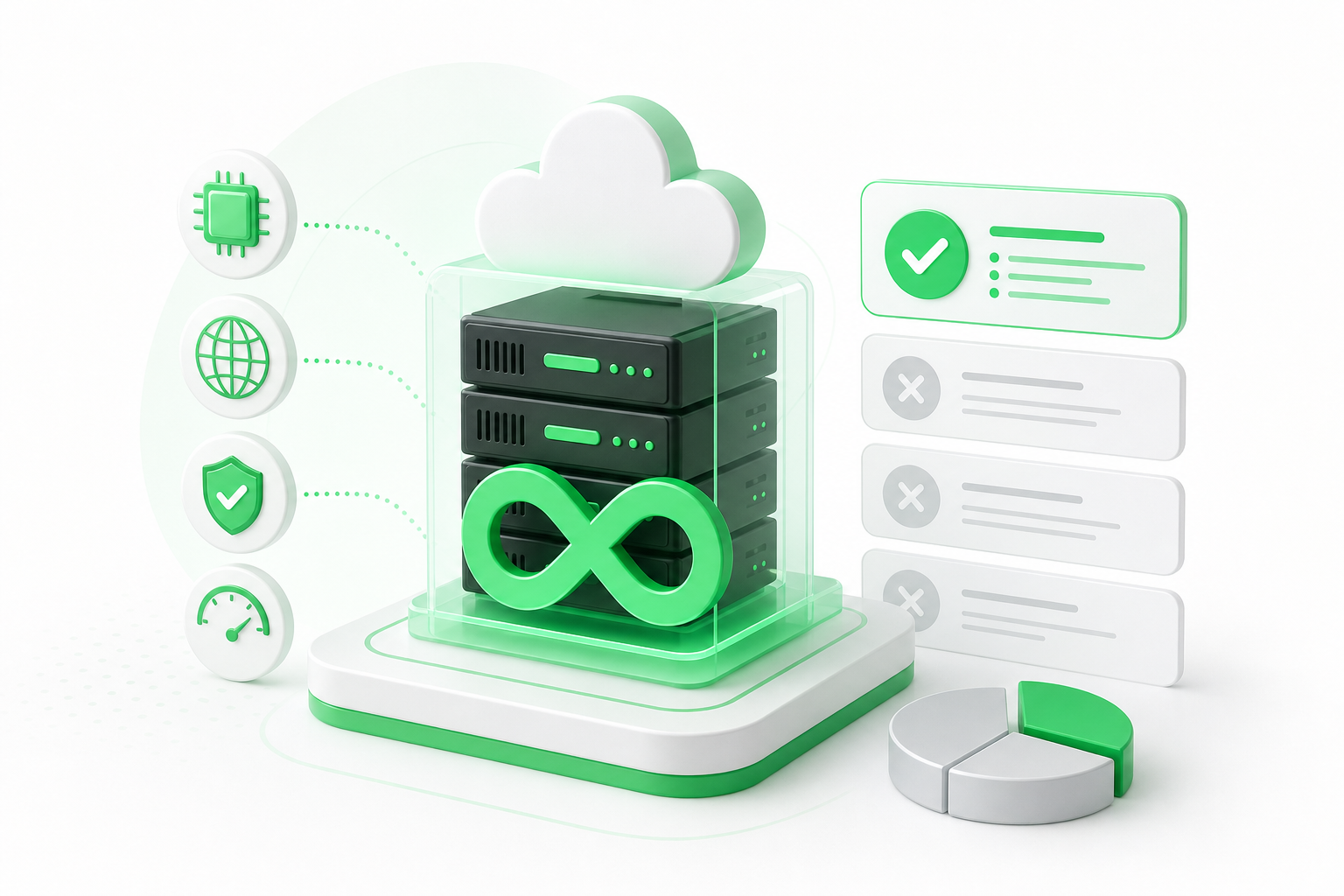
Is free VPS hosting forever real? Yes, but only a few plans qualify. Oracle Cloud Always Free and Google Cloud's e2-micro are the only plans with no end date, and both ask for a card to verify you. Fly.io credits can keep small containers running indefinitely. Kamatera and AWS are time-limited trials, and idle free servers can be reclaimed.
This guide separates the permanent tiers from the trials, uses the limits that apply today, and then walks you through getting a server running.
What “Free VPS Hosting Forever” Actually Means in Practice
A VPS (Virtual Private Server) is a slice of a physical machine that acts like your own server, with its own operating system and root access. "Free forever" means the provider sets no end date on the plan. It does not mean no strings attached.
There are three different things sold under the same label:
- Always Free tiers. No expiry date. Oracle Cloud and Google Cloud both work this way.
- Credit-based plans. You get a pool of credit that runs out. Fly.io's monthly credit can keep small containers alive indefinitely, but it is not a classic VPS.
- Time-limited trials. Kamatera gives a 30-day trial. AWS stopped offering its 12-month free tier to new accounts on July 15, 2025, and now gives a starter credit with a 6-month free plan instead.
Simple rule: if a plan has an end date or a credit that drains, it is a trial, not a forever plan.
One more thing to know up front. Almost every provider on this list asks for a credit or debit card before it activates your account. The card is for identity verification. You won't be charged if you stay inside the free limits, but you do need a card to start.
Oracle Cloud Always Free: Specs, Limits and Review
Oracle Cloud Always Free is the most generous permanent offer, and it is also the one most articles get wrong. Many still quote 4 OCPUs and 24 GB of RAM on the Arm side. That figure is outdated: Oracle cut its Always Free Arm resources to 2 OCPUs and 12 GB of RAM, according to WhatsTheHost.
Here is what the Oracle Cloud free tier includes today:
- Two AMD-based micro VMs
- Arm-based Ampere A1 VMs, within the reduced 2 OCPU / 12 GB allowance
- 200 GB of block storage
- Up to 10 TB of outbound data transfer per month, per rs1.es (10TB)
Those specs are enough for a personal website, a small VPN, a Git server, or a place to practice Linux administration. The 10 TB of monthly transfer is far more bandwidth than most free plans give you.
Now the honest review. The catches are real:
- Card required. Oracle verifies you with a credit or debit card.
- Fixed home region. You pick a region at signup, and it cannot be changed later. Always Free resources live only there.
- Capacity shortages. Popular regions often have no free Arm capacity, so creating an instance can fail repeatedly.
- Idle reclaim. Oracle may reclaim always-free instances that sit idle for about 7 days, according to samnet.dev. Idle here means very low CPU and memory use.
Is Oracle's VPS really free forever? Yes, as long as you stay within the limits, keep the server doing real work, and accept that the allowance has shrunk before and could change again. Treat it as a free tier you rely on with care, not a promise carved in stone.
Google Cloud Free Tier: What Are the Catches?
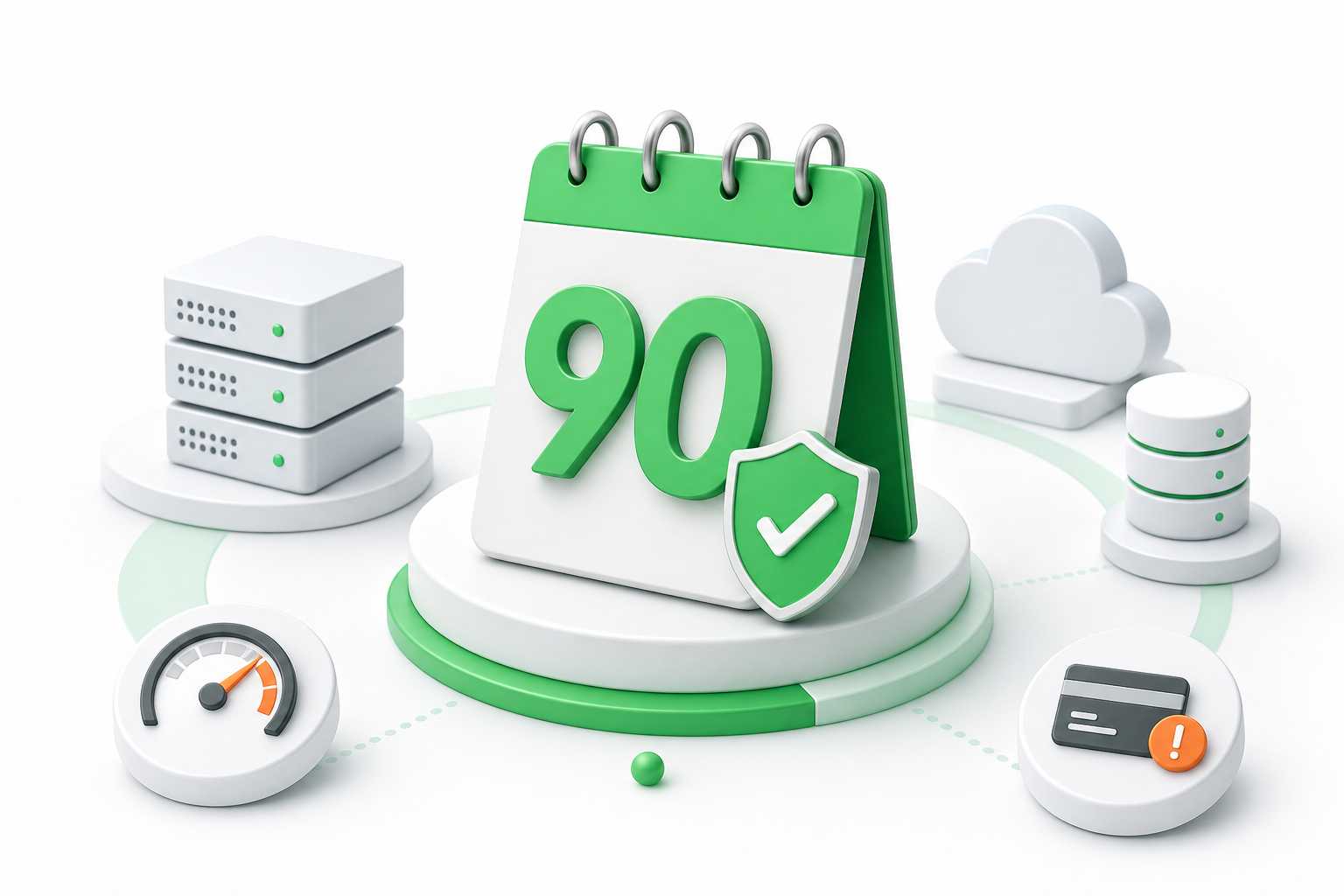
Google Cloud's free tier gives you one e2-micro instance that stays free forever, plus a 90-day starter credit. The credit is a trial. The e2-micro is the permanent part.
The catches are specific:
- US regions only. The free e2-micro runs in us-west1, us-central1, or us-east1. If your visitors are in Brazil or Europe, expect extra latency.
- Tiny allowance. You get 1 GB of RAM. That is fine for a lightweight site or a script runner, but it struggles with databases or Docker.
- Almost no bandwidth. Only 1 GB of free outbound data per month is included. A busy site or a VPN will pass that quickly, and extra traffic is billed.
- Card required. Like Oracle, Google asks for a card to verify your account.
The bandwidth cap is the one that catches people off guard. A free server that quietly generates a bill is not free, so check your network usage in the console during the first weeks.
Idle servers are a risk everywhere, not only at Google. Providers that give away compute want it used, and they may reclaim inactive free instances. Oracle states this rule most clearly, with the 7 days window noted above. For any other provider, read the current terms before you build something you can't afford to lose.
The practical advice: use Google's e2-micro for small, steady jobs, back up anything you care about, and never treat a free instance as your only copy.
Fly.io Credits: The Best Free Option for Docker Containers?
Fly.io is the best fit on this list if you want to run Docker containers, because it is built around them. It is not a traditional VPS. It runs your app in micro-VMs and containers, and it gives you a small monthly free compute credit that can keep small containers running indefinitely.
That makes it a different kind of free. You don't get a full operating system to log into and configure. You package your app as a container image, and Fly.io runs it for you.
Compare that with the other options for Docker:
- Google's e2-micro has 1 GB of RAM, which struggles with containers.
- Oracle's free tier has the room to run Docker on a full VM, but you take on the region and capacity catches described above.
- Fly.io fits a small web app, an API, or a bot that needs to stay up around the clock.
The limits are simple. The credit is a monthly budget, so a container that uses more compute than the credit covers starts to cost money. A card is required for verification here too.
Pick Fly.io when your project already lives in a container. Pick Oracle when you want a full server you can shape yourself.
Free Trials That Expire: Kamatera, AWS and Hostinger
Kamatera, AWS and Hostinger all expire or require payment, so none of them is free forever. They are useful for testing a workload before you commit, but they belong in a separate bucket from the permanent tiers.
AWS needs the biggest correction. Many older guides still describe a 12-month free tier, but for new accounts that ended on July 15, 2025. AWS now offers a starter credit and a 6-month free plan. When the six months or the credits run out, the account is suspended or becomes billable. Accounts created before the change may still carry the old terms.
| Provider | Free duration | Always free? | Best for |
|---|---|---|---|
| Kamatera | 30-day trial with starter credits | No | Testing a custom cloud server |
| AWS | Starter credit plus a 6-month free plan | No | Learning AWS services on a short timeline |
| Hostinger | 30-day money-back guarantee | No | Trying a paid KVM VPS with a refund option |
Kamatera needs a valid physical credit card, and hourly billing starts right away if you exceed the trial limits. Its servers are unmanaged by default, so you handle the setup yourself.
Hostinger is a refund, not a trial. You pay upfront, and the 30-day money-back guarantee lets you recover the cost if you cancel in time.
How to Set Up Your Free VPS: Region, Instance and the Double Firewall
This walkthrough uses Oracle Cloud, since it is the one permanent option with a full server and enough resources to be worth the effort. The order of the steps matters, especially the first one.
- Choose your home region carefully. Always Free resources are restricted to this region, and you cannot change it later [S1]. Pick the region closest to your visitors, but also one with free capacity. Popular regions often run out of Arm instances, so a quieter region can save you days of retries. This is the best region for Oracle free tier use: close enough to be fast, empty enough to have stock.
- Create your account and verify your card. Oracle needs a credit or debit card to confirm you are a real person. Staying inside the free limits keeps the charge at zero.
- Create an instance. Select a shape labeled Always Free eligible. Pick the Arm Ampere A1 shape within the reduced 2 OCPUs and 12 GB allowance, or one of the AMD micro shapes. If you see an "out of capacity" error, try again later or a different availability domain.
- Download your SSH key. Save the private key when prompted. You cannot recover it, and without it you cannot log in.
- Open the port in the cloud firewall. Oracle blocks most traffic by default. In your virtual cloud network, add an ingress rule for the port you need, such as 80 or 443 for a website.
- Open the same port in the OS firewall. This is the step that locks beginners out. Your instance has two firewalls: the cloud rules and the firewall inside the operating system. Opening only one leaves the port closed. On Ubuntu images, the OS firewall often ships with restrictive iptables rules, so allow the port there as well.
- Test and keep it busy. Visit your server's public IP. Then run a real workload so the instance never looks idle.
If your site still won't load, the double firewall is almost always the cause. Check the cloud rule first, then the OS rule.
Do You Need a Credit Card, and When Should You Move to a Paid VPS?
Almost every free VPS asks for a credit or debit card, and none of the tools in this guide offers a card-free route. Oracle, Google, Kamatera, Fly.io and AWS all use the card to verify you. If you don't have one, a free VPS is likely out of reach for now.
Staying free is mostly about staying inside the limits and using the server. Set a billing alert if the provider offers one, watch outbound traffic on Google's tiny allowance, and keep a real workload running so an Oracle instance doesn't look idle. Back up anything you care about, since a free server can be reclaimed or changed.
So when does a paid VPS make more sense? Move up when any of these show up:
- Your project needs steady uptime and you can't risk a reclaim.
- You need more RAM or CPU than a free tier gives you.
- Your visitors are far from the only region you can use.
- You'd rather have support than a forum thread.
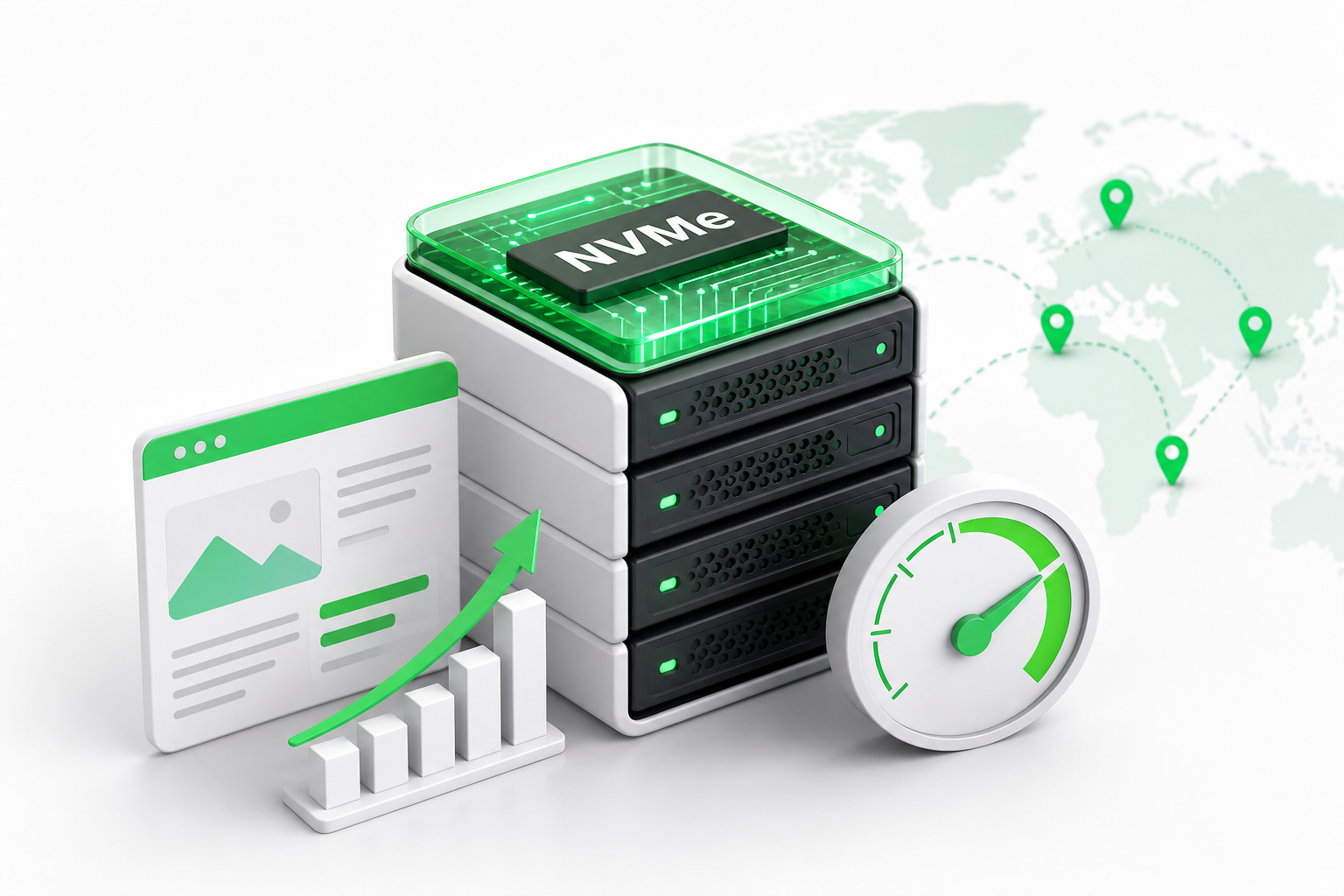
That's where a paid plan earns its keep. Napoleon is a hosting provider that offers VPS and bare metal servers in Brazil and the USA, with NVMe storage and 24/7 support, so you can place a server close to your audience. For a deeper look at what to check before you buy, see the VPS server guide.
Prices and plan limits verified as of November 2026.
FAQs
Can I get a free VPS without a credit card?
Almost never. Oracle, Google Cloud, Kamatera, Fly.io and AWS all require a credit or debit card to verify your account. The card is a check, and you aren't charged while you stay within the free limits. If you have no card, a free VPS is hard to get, so plan around that.
What are the catches with Google Cloud’s free tier?
The free e2-micro runs only in us-west1, us-central1, and us-east1. It has 1 GB of RAM and 1 GB of free outbound data per month. That is enough for a light script or site, but not for databases, Docker, or busy traffic. A card is also required.
Is Hostinger’s VPS free, or just refundable?
It's refundable, not free. Hostinger offers KVM VPS hosting with a 30-day money-back guarantee. You pay upfront, and you recover the cost only if you cancel within that window. If you want a plan that costs nothing, look at Oracle or Google instead.
Can I run a VPN or a game server on a free VPS?
A small VPN is realistic on Oracle's free tier, which has generous bandwidth and enough CPU. Google's e2-micro has only 1 GB of monthly outbound data, so a VPN would pass it fast. Game servers need steady CPU and RAM, and most free tiers are too small. Check each provider's current terms first.
Do free VPS plans come with root access and a static IP?
Oracle's free instances give you full root access over SSH, and you log in with the key you download at setup. Fly.io is different: it runs containers, so you don't get a full server to log into. Check each provider's current terms for IP details before you rely on a fixed address.
What should I do when my free VPS trial ends?
Back up your data first, then decide. Trials like Kamatera and AWS end when the time or credits run out, and AWS accounts then suspend or turn billable. You can move your project to an always-free tier, or to a paid VPS if it has outgrown the free limits.
Conclusion
Free VPS hosting forever exists, but only a few plans qualify. Oracle Cloud Always Free and Google's e2-micro are the permanent ones, Fly.io credits can keep small containers alive, and the rest are trials or refunds. All of them ask for a card.
Before anything else, pick your Oracle home region carefully, then open the port in both the cloud firewall and the OS firewall. If your project needs steady uptime or more power than a free tier allows, treat that as your cue to move to a paid server.