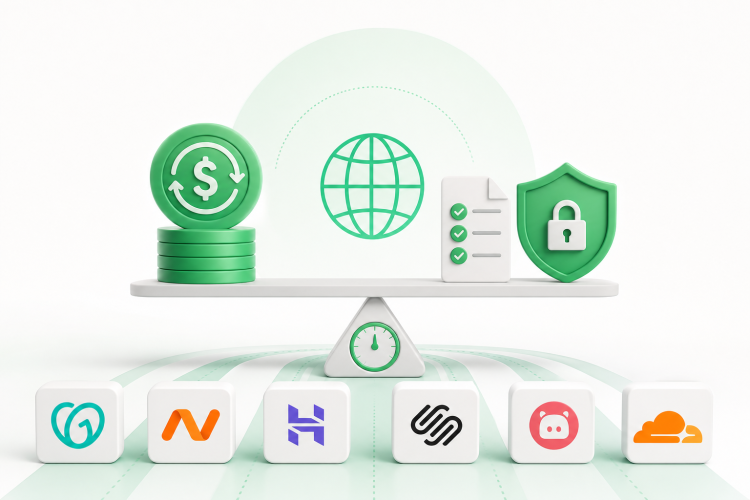
The best domain buying site depends on what you value. Namecheap suits budget buyers, Cloudflare offers wholesale pricing with no markup, Porkbun favors transparent fees, GoDaddy is easiest for beginners, Hostinger bundles domains with hosting, and Squarespace Domains fits site-builder users. Compare renewal cost, privacy defaults, and transfer rules, not just the first-year price.
The cheapest first-year price rarely makes the cheapest domain over time. A domain is something you keep paying for, so the renewal bill matters more than the sign-up banner. Below you'll find a side-by-side look at six registrars and the renewal, privacy, and transfer terms to check before you buy.
Which Are the Best Domain Buying Sites in 2026?
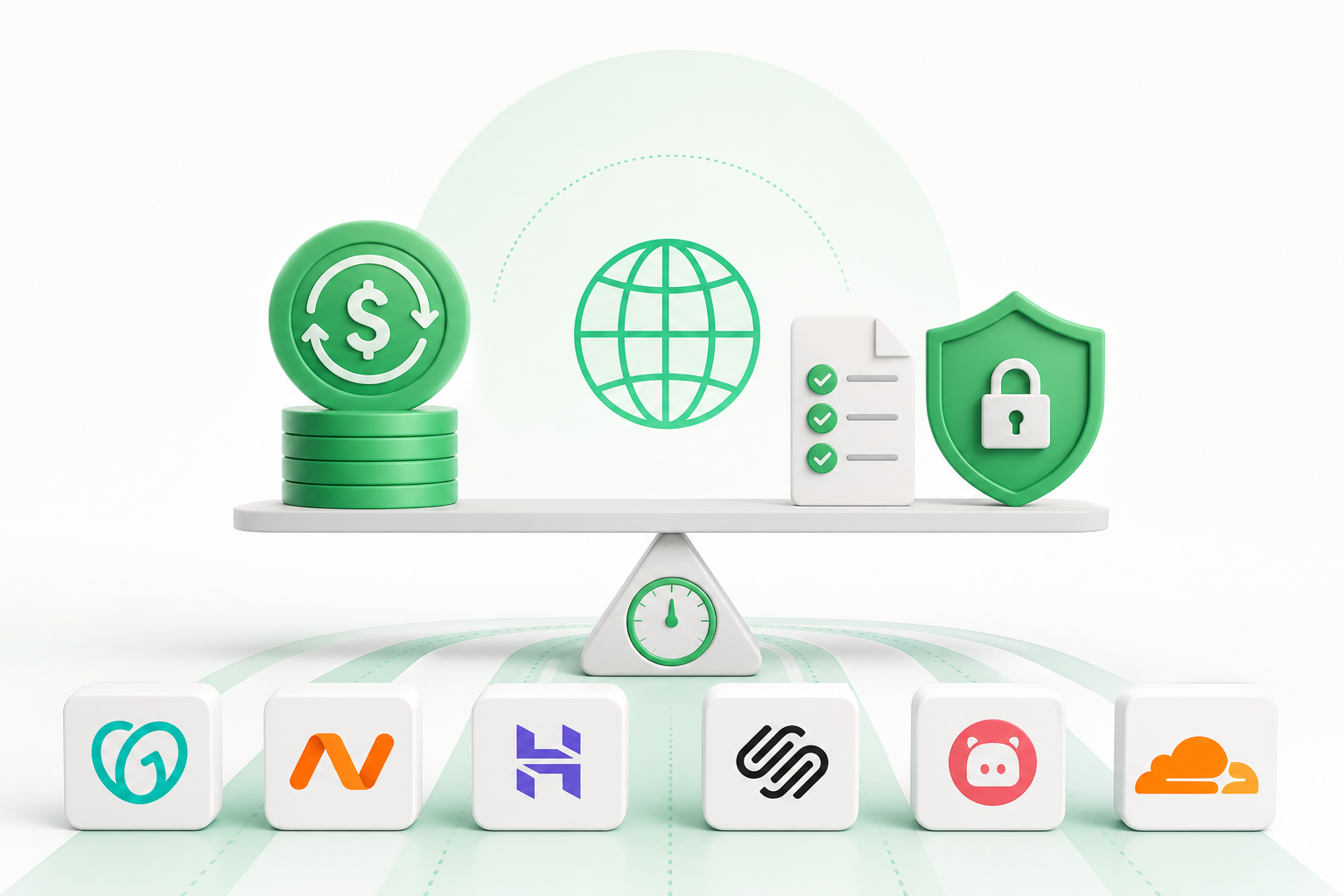
The best domain buying sites in 2026 are GoDaddy, Namecheap, Hostinger, Squarespace Domains, Porkbun, and Cloudflare, and each one fits a different kind of buyer. The market behind them keeps growing, with a forecast of 3.3% annual growth to 459.9 million registrations by 2030, according to Research and Markets' 2026 report.
| Registrar | Best for | Price tier | Notable strength |
|---|---|---|---|
| GoDaddy | Beginners and small businesses | Budget | Domains, site builder, and hosting in one place; focus on ease of use |
| Namecheap | Long-term value seekers | Budget | Affordable registration and management tools |
| Hostinger | Buyers who also need hosting | Budget | Low-cost domains and VPS, often with a free domain bundled into hosting plans |
| Squarespace Domains | Site-builder users | Premium | Domain management tied to its website builder; successor to Google Domains |
| Porkbun | Developers and tech-savvy users | Premium | Transparent pricing and support for over 500 TLDs |
| Cloudflare | Existing Cloudflare users | Mid-tier | Wholesale pricing with no markup, plus CDN and security services |
Which Registrar Has the Best Renewal Rates for.com Domains?
No single registrar wins on renewal for every buyer. The first-year promo price tells you little about what you'll pay in year two, and the lowest sticker prices often come with conditions. Read the checkout page closely.
Take Hostinger's own lowest price. It typically applies to the first year of a 3-year term. GoDaddy's lowest promotional rates often need a long-term commitment too, and a price jump at first renewal is common.
Namecheap's introductory prices frequently depend on promo codes for new customers. Cloudflare sidesteps the markup game by selling at wholesale. Porkbun is known for putting its fees in plain view.
Then there are the add-ons. Privacy protection, ICANN-related surcharges, and extras bundled at checkout can all change your total. We don't have verified amounts for those fees, so check each registrar's checkout page for the real numbers.
One more thing: don't confuse industry data with a registrar's pricing. The combined renewal rate for.com and.net hit 75.2% in the second quarter of 2026, per DNIB.com, citing Verisign data. That number shows how many domains get renewed across the whole industry. It tells you nothing about what any single registrar charges.
GoDaddy: Easy to Start, Check the Renewal Terms
GoDaddy is a good fit if you're new to domains and want a familiar, beginner-friendly place to start. It pairs domain registration with website building tools and hosting, and its focus is ease of use and small business growth.
The trade-off is the fine print. Its lowest promotional rates often require a long-term commitment, such as a 3-year term, and a price jump at first renewal is common. Check the renewal price before you click buy.
Customers do tend to stay. GoDaddy reported retention of about 85% in 2025, rising to 90% for customers who stayed over three years, according to webhosting.today. That's a retention figure, not proof of lower prices or better service.
Namecheap, Porkbun, and Cloudflare: Value and Transparency
These three suit you if clear pricing matters more to you than a one-stop shop. Each makes a different trade-off.
Namecheap offers affordable registration and management tools and is often named a top pick for long-term value. The catch: introductory prices often need specific promo codes. Together with its Spaceship brand, it forms one of the largest registrar families in the world.
Porkbun is favored by developers and tech-savvy users for transparent pricing. Its market share is small, around 1.3%, but it supports over 500 TLDs (top-level domains, the part after the dot). If you want an unusual extension, that range helps.
Cloudflare sells domains at wholesale prices with no markup. It makes the most sense if you already use its CDN and security services.
Whichever you pick, confirm the registrar is ICANN-accredited and check whether WHOIS privacy (which hides your contact details from public lookup) is included or costs extra.
Hostinger and Squarespace Domains: Bundles and Builder Ecosystems
Choose a bundle when you want your domain and website in the same dashboard. A bundle is simply a hosting domain name package: you register the name and attach it to a hosting plan or site builder in one purchase.
Hostinger specializes in low-cost domains and VPS hosting, and often bundles a free domain with hosting plans. If you're weighing a Hostinger domain purchase, use its live search to check availability, since results change by the minute. Keep in mind that its lowest prices usually cover the first year of a 3-year term, and reported churn is high for first-time VPS renewal cohorts.
Squarespace Domains is the main successor to Google Domains and ties domain management to its website builder. Renewal prices may run higher than at budget registrars like Namecheap or Dynadot. For builder users, the convenience often outweighs that gap.
How Do You Buy a Domain Name Step by Step?
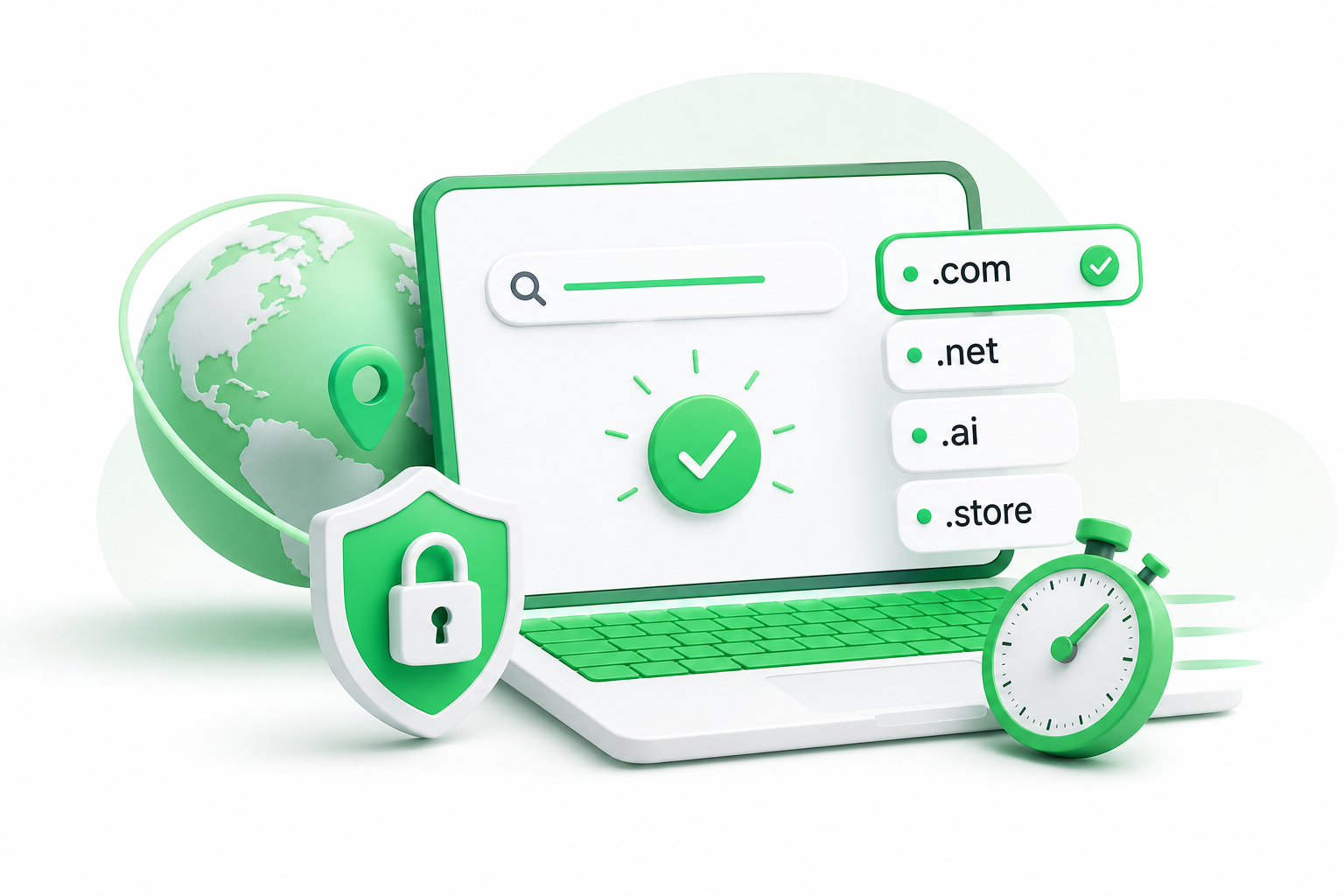
You buy a domain by checking that the name is free, choosing an extension, and paying a registrar. Here is the process [S1, S4]:
- Check domain availability. Search your preferred name at a registrar. AI-driven name generators can suggest brandable options if your first choice is taken.
- Select a domain extension..com is the familiar default. Newer ones like.ai or.tech can suit niche brands, but weigh recognition against fit.
- Validate and purchase. Review the renewal price, privacy settings, and any add-ons, then pay.
- Establish your online presence. Point the domain to your hosting or site builder.
Can you buy a domain permanently? Not really. A domain is registered, not owned outright, so you renew it on a regular term. Most buyers acquire only a handful: 66% of domain investors in one 2026 survey bought fewer than 100 names a year, per Identity Digital (vendor-reported). To dodge high renewal fees later, you can transfer a domain to another registrar, so check each registrar's transfer rules before you buy.
How Do You Choose Between Domain Buying Sites?
Match the registrar to how you'll use the domain. Beginners lean toward GoDaddy, bargain hunters toward Namecheap, developers toward Porkbun, Cloudflare users toward Cloudflare, and builder users toward Squarespace. Whatever you choose, compare the renewal price, privacy defaults, and transfer rules. Industry renewal rates sit around 75.2% for.com and.net, which tells you most people keep their names, and registrations are forecast to grow 3.3% a year through 2030, so plan for the long haul.
There's one more route. If you want your domain next to your hosting, VPS, or dedicated servers, Napoleon lets you register domains and manage them from the same client panel. You can also pick cPanel, DirectAdmin, or Plesk, with servers in Brazil and the USA. The Business plan page shows how domain and DNS management fit with hosting.
Prices and plan limits verified as of November 2026.
FAQs
Are new gTLDs like.ai or.tech worth the investment compared to.com?
It depends on your brand. A new gTLD (generic top-level domain) can signal your niche and may be easier to get in a short, memorable form. A.com is still the most familiar to visitors. Check the renewal price for any extension before committing, since it can differ from the first-year offer.
Does WHOIS privacy protection cost extra at most registrars?
It varies by registrar. Some include privacy by default, while others sell it as an add-on at checkout. We have no verified fee amounts, so look for the privacy line item before you pay.
Can I buy a domain permanently, or am I only renting it?
You register a domain for a set term and renew it to keep it. It isn't a permanent purchase. As long as you renew on time, the name stays yours to use, but missing a renewal can release it.
Is it cheaper to buy a domain and hosting from the same company?
Sometimes. Bundles from providers like Hostinger often include a free domain with a hosting plan. But the free offer may cover only the first term, so compare the renewal cost, not just the starting price.
What is an ICANN-accredited registrar and why does it matter?
ICANN (the Internet Corporation for Assigned Names and Numbers) oversees the domain system and accredits registrars that meet its rules. Buying through an accredited registrar means you work with a vetted company bound by those standards. It also helps when you want to transfer a domain later.
How do AI-driven domain search tools help find brandable names?
They suggest available names based on your keywords, so you spend less time hitting taken results. Treat their ideas as a starting list, then confirm availability and renewal price at the registrar before you buy.
Conclusion
The best domain buying site is the one whose renewal price, privacy defaults, and tools match how you'll use the name, not the one with the lowest first-year banner. Cheap sign-up deals often come with commitments and renewal jumps, so the full cost shows up in year two.
Before you buy, open the checkout page and read the renewal price and privacy terms. Then decide whether you want the domain on its own or alongside hosting, and pick the registrar that fits that answer.