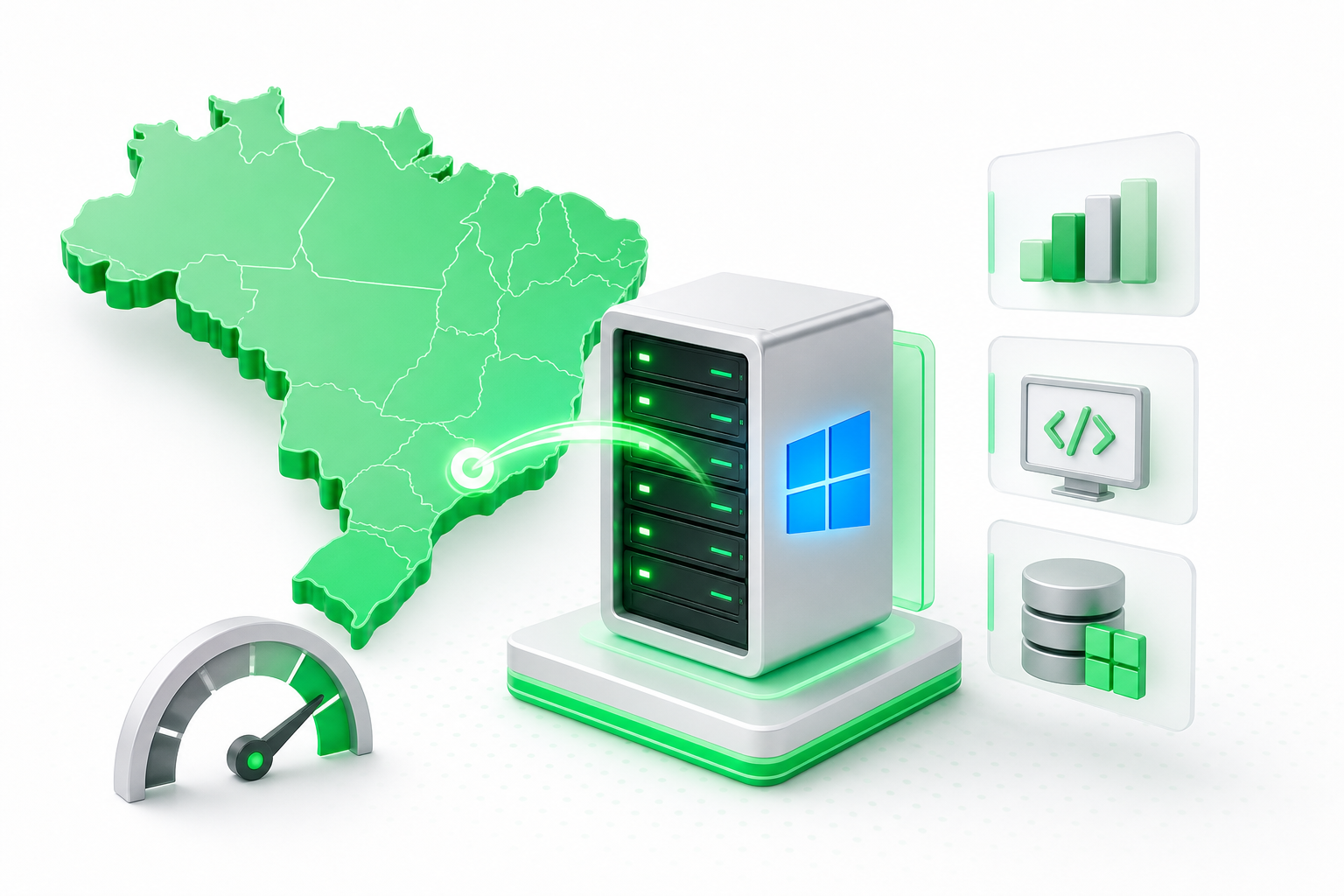
Choosing a datacenter Brasil location for your site means your visitors stop waiting hundreds of milliseconds for each request and start getting responses in single digits. That difference shows up in page load speed, search rankings, and conversion rates, making server location one of the most important infrastructure decisions you can make.
Every time a visitor in São Paulo opens your site, the browser sends a request to your server and waits for a response. If that server sits in Europe or the United States, the request crosses thousands of kilometers of undersea cable before a single byte comes back. Choosing a server inside Brazil shortens that path dramatically, and the effect shows up in every interaction your visitors have with your site.
What Is Latency and Why Does It Affect Your Brazilian Users? (Datacenter Brasil Basics)
Latency is the time it takes for a data packet to travel from a user's device to your server and back. Developers call this the round-trip time, or RTT. It is measured in milliseconds, and even small increases add up fast when a single page load triggers dozens of individual requests for images, scripts, fonts, and data.
The dominant factor in latency is physical distance. A round trip between São Paulo and a server in Frankfurt covers thousands of kilometers of fiber-optic cable. That distance sets a hard floor on response time that no software optimization can remove.
For Brazilian users, this matters in concrete ways. A visitor loading your homepage does not experience one round trip; they experience many. Each resource the browser needs, a stylesheet, a JavaScript file, a product image, adds its own RTT to the total load time. When your server is far away, those delays stack. When it is nearby, they shrink.
Routing compounds the problem. A request from a visitor in Recife to a server in the United States may pass through five or more intermediate nodes, each adding delay. A request to a server in São Paulo typically reaches its destination in two or three hops, keeping the total cost low.
The result is a measurable difference in how fast your site feels to the people who matter most: your Brazilian visitors. Latency is not a background technical concern. It is the gap between a user who stays and one who leaves.
How Does a Datacenter Brasil Location Change Real-World Performance?
When a user in Brazil hits a server hosted locally, the request stays within the country's domestic network backbone. The round-trip time is short, routing is direct, and the browser receives its first byte quickly. Compare that to a server hosted overseas, and the contrast becomes clear at every stage of the connection.
Routing hops add to the problem. Each hop is a handoff between routers, and each handoff takes time. International routes often pass through exchange points in Miami, New York, or Amsterdam before reaching their destination. Domestic Brazilian routes stay inside the country's own exchange infrastructure, which is far more direct.
Page load time is where all of this becomes visible to your users. A browser does not load a page in one request. It parses HTML, discovers dependencies, and fires off parallel requests for every asset the page needs. Each of those requests pays the RTT cost. On a local server, that cost is small and the page assembles quickly. On a distant server, the cost multiplies across every asset and the page feels slow even when the server itself is powerful.
The compounding effect is the key point. A single extra hop or a longer cable route does not just add one delay; it adds that delay to every request the browser makes. A page with many assets on a distant server can take several times longer to load than the same page on a local one, not because the server is weaker, but because geography is working against it.
Choosing a datacenter in Brazil removes geography as an obstacle. Your server is close to your users, routing stays domestic, and every request pays the lowest possible latency cost.
Why Latency Directly Impacts SEO and Conversions in Brazil
Google uses page speed as a ranking signal, and server response time is a direct input into that signal. When your server takes a long time to deliver its first byte, every downstream metric suffers: Largest Contentful Paint climbs, Cumulative Layout Shift can worsen as resources load out of order, and your overall Core Web Vitals score drops.
Core Web Vitals are the set of user experience metrics Google uses to evaluate page quality. Time to First Byte, or TTFB, is the earliest measurable point in that chain. It reflects how long the browser waited after sending a request before receiving any data. A server located far from the user produces a high TTFB by default, regardless of how well the rest of the site is optimized. If you want to understand how hosting choices can drag down your search visibility, the guide on 10 signs your hosting is hurting your SEO covers the patterns in detail.
Google also uses server location as a geotargeting signal. A server with a Brazilian IP address, hosted in a Brazilian datacenter, sends a clear signal that the site is intended for Brazilian users. That signal supports your visibility in local search results. A site hosted overseas without explicit geotargeting configuration may rank less reliably for searches made inside Brazil.
The conversion impact is equally direct. Users abandon slow pages. The relationship between load time and bounce rate is well established: as pages take longer to load, more visitors leave before the page finishes rendering. For e-commerce sites, this means lost sales. For lead generation sites, it means lost contacts. For any site that depends on Brazilian traffic, a slow server located outside the country is a quiet drain on results.
Reducing latency through local hosting addresses all three of these problems at once. It lowers TTFB, improves Core Web Vitals scores, strengthens geotargeting signals, and gives users a faster experience that keeps them on the page long enough to convert.
Shared Hosting vs. VPS Brasil: Which Infrastructure Fits Your Needs?
The right hosting tier depends on how much traffic you receive, how much control you need, and whether your site shares resources with other accounts. For most Brazilian site owners, the decision comes down to shared hosting or a VPS (Virtual Private Server) in Brazil, and the choice has real consequences for performance.
Shared hosting puts your site on a server alongside many other accounts. All of those accounts draw from the same pool of CPU, memory, and bandwidth. The cost is low and setup is simple, which makes it a reasonable starting point for new sites, personal projects, or small businesses with modest traffic. The trade-off is that a spike in activity on a neighboring account can slow your site down, because the resources are not isolated.
A VPS in Brazil gives you a dedicated slice of a physical server. Your CPU allocation, RAM, and storage are reserved for your account alone. Other tenants on the same physical machine cannot consume your resources. That isolation means your site performs consistently, even during traffic peaks, and you have the freedom to configure the server environment to match your application's needs.
The traffic threshold where shared hosting starts to feel limiting varies by site, but the signs are recognizable: slow response times during busy periods, resource usage warnings from your host, or an application that needs a specific software version or custom configuration that a shared environment cannot provide. When those signals appear, a VPS is the natural next step.
Use cases help clarify the decision. Shared hosting suits informational sites, portfolios, and early-stage projects where traffic is low and predictable. A VPS suits growing e-commerce stores, SaaS applications, high-traffic blogs, and any project where consistent performance is not optional. If you want a deeper look at how shared hosting works and when it makes sense, the guide to shared hosting plans covers the fundamentals in full.
For Brazilian site owners specifically, choosing a VPS in Brazil rather than a shared plan on an overseas server often produces a bigger performance gain than upgrading from shared to VPS on a foreign host. Local infrastructure and resource isolation together address both the latency problem and the contention problem at once.
How to Choose a Datacenter in Brazil: A Step-by-Step Checklist
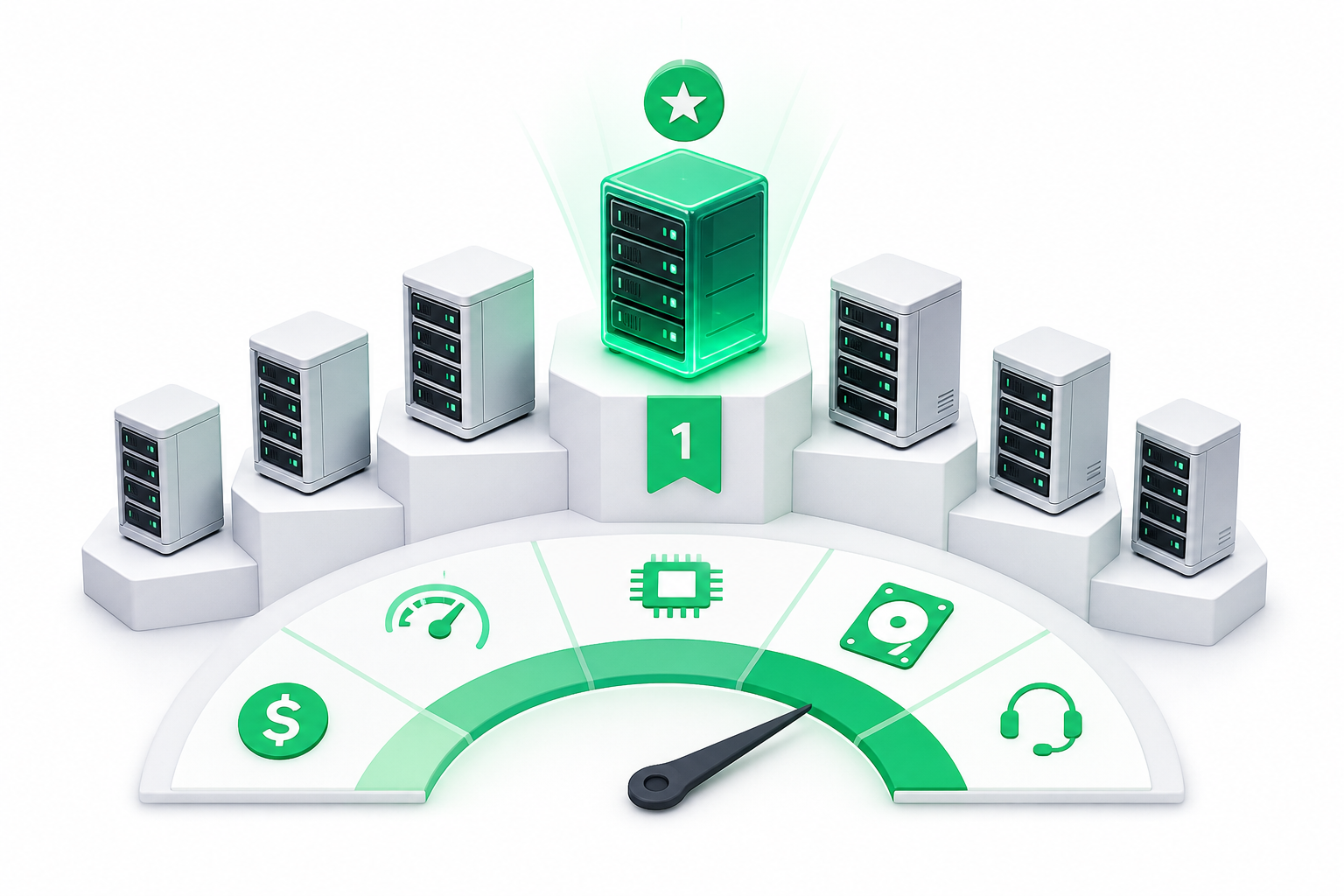
Picking a Brazilian hosting provider is not just about price. The criteria below are the ones that actually affect whether your site performs well, stays online, and keeps your data protected under Brazilian law.
Confirm the datacenter is physically in Brazil. Ask the provider which city their servers are in and verify that the IP ranges are registered to Brazilian infrastructure. A provider that says "optimized for Brazil" but hosts servers in Miami is not the same as one with hardware in São Paulo.
Check the uptime guarantee and how it is measured. Look for a provider that publishes a clear uptime commitment and specifies how downtime is calculated and compensated. A high uptime figure means little without a transparent measurement method behind it.
Verify the storage type. NVMe (Non-Volatile Memory Express) storage reads and writes data significantly faster than older SATA SSD or HDD options. For sites with databases, file-heavy applications, or high request volumes, NVMe storage reduces disk I/O wait time and contributes to faster overall response.
Confirm 24/7 support availability. Brazilian business hours do not cover every incident window. A provider whose support team is only reachable during a narrow window in a different time zone adds risk. Confirm that support is available around the clock and that response times are stated, not just implied.
Review the control panel options. cPanel, DirectAdmin, and Plesk are the three most common panels for managing hosting accounts. Each has a different interface and feature set. Choose a provider that offers the panel your team already knows, or one that gives you a choice.
Assess LGPD compliance posture. The LGPD (Lei Geral de Proteção de Dados) is Brazil's data protection law. Storing personal data on servers physically located in Brazil simplifies your compliance obligations and reduces the legal complexity of cross-border data transfers. Ask the provider directly how they support LGPD compliance.
Test the self-service management tools. A good provider gives you a client panel where you can manage services, open support tickets, and make changes without waiting for a human. Before committing, ask for a demo or check documentation to confirm the panel covers what you need.
What Types of Hosting Does a Brazilian Infrastructure Provider Offer?
Napoleon is a web infrastructure provider that offers shared hosting, VPS, and bare metal dedicated servers hosted in Brazil and the United States. Each tier serves a different workload, and understanding what each one delivers helps you match the right product to your project.
Shared hosting is the entry-level tier. Your site runs on a server shared with other accounts, managed through a control panel such as cPanel, DirectAdmin, or Plesk. It suits low-traffic sites, personal projects, and businesses that need a straightforward setup without server administration overhead.
VPS (Virtual Private Server) gives you an isolated virtual machine with dedicated resources. You get your own CPU allocation, RAM, and NVMe storage, with full control over the server environment. This tier suits growing applications, e-commerce stores, and any project where consistent performance under variable traffic is a requirement. For a closer look at what makes a local VPS the right call for Brazilian projects, the article on choosing a VPS server with local datacenter infrastructure goes deeper on the decision.
Bare metal dedicated servers give you an entire physical machine with no virtualization layer between your workloads and the hardware. This tier suits high-traffic platforms, resource-intensive applications, and businesses that need maximum control over their infrastructure. The performance ceiling is higher than any virtualized option because there is no hypervisor sharing the underlying hardware.
All three tiers are available with Brazilian datacenter hosting, so local latency is not limited to any single plan.
How Do You Test Latency Before Committing to a Hosting Provider?
Testing latency before you sign up takes less than five minutes and removes any guesswork about a provider's actual performance.
Run a ping test. Open your terminal and run
ping [provider-IP-or-hostname]. The average round-trip time in the results tells you the baseline latency between your machine and that server. A Brazilian server pinged from a Brazilian connection should return a noticeably lower number than one hosted overseas.Run a traceroute. Use
tracerouteon macOS/Linux ortracerton Windows. This shows every hop between your device and the server. Count the hops and look for any that pass through international exchange points, which signals the route is leaving the country.Use a browser-based speed test. Tools like Ping.pe or similar latency checkers let you test from multiple global locations simultaneously. If the provider publishes a test IP, run it through one of these tools to see how Brazilian nodes respond compared to nodes in the US or Europe.
Check TTFB on a demo page. If the provider offers a sample or demo URL, open Chrome DevTools, go to the Network tab, load the page, and read the TTFB value on the first HTML request. A low TTFB confirms the server is responding quickly from your location.
Combine these four checks and you will have a clear, evidence-based picture of what a provider's infrastructure actually delivers before you commit.
FAQs
Does hosting in Brazil help with LGPD compliance?
Yes, it simplifies compliance. The LGPD (Lei Geral de Proteção de Dados) is Brazil's data protection law, and it places specific obligations on how personal data is stored and transferred across borders. When your server is physically located in Brazil, personal data collected from Brazilian users stays inside the country's legal jurisdiction. That removes the need to navigate cross-border data transfer rules and reduces the legal complexity of your compliance posture. It does not replace a full LGPD compliance program, but it removes one significant layer of risk.
What is the difference between a datacenter in São Paulo and one in other Brazilian cities?
São Paulo hosts the country's main internet exchange point, the IX.br (PTT Metro), which is the hub where most Brazilian ISPs and networks interconnect. A server in São Paulo benefits from the shortest routing path to the largest share of Brazilian internet traffic. Servers in other cities, such as Curitiba or Rio de Janeiro, can still offer low latency for regional users, but São Paulo infrastructure generally produces the most consistent performance for a national audience.
Can I use a CDN instead of a Brazilian datacenter to reduce latency?
A CDN (Content Delivery Network) can reduce latency for static assets like images, stylesheets, and JavaScript files by caching them on edge nodes close to your users. However, a CDN does not replace a local origin server. Dynamic requests, such as database queries, login sessions, and checkout flows, must still reach your origin server. If that origin is overseas, those dynamic requests still pay the full international latency cost. A Brazilian datacenter and a CDN work best together: the CDN handles static content, and the local origin handles everything dynamic.
What is Time to First Byte (TTFB) and why does it matter for Brazilian websites?
TTFB (Time to First Byte) is the time between a browser sending a request and receiving the first byte of the server's response. It is the earliest measurable signal of server performance and a direct input into Google's Core Web Vitals assessment. For Brazilian websites hosted overseas, TTFB is often high simply because of the physical distance the request must travel. A high TTFB delays every subsequent step of the page load, meaning even a well-optimized site can feel slow if its origin server is far from its users.
Is a VPS in Brazil faster than shared hosting on the same local server?
Generally, yes. Both options benefit equally from low latency when hosted in the same Brazilian datacenter, so geography is not the differentiator here. The speed advantage of a VPS comes from resource isolation. On shared hosting, CPU and memory are shared across many accounts, and a traffic spike on one account can slow down others. A VPS reserves those resources for your account alone, so your site responds consistently regardless of what neighboring accounts are doing. For sites with growing traffic or variable load, that isolation produces a more reliable experience.
How many milliseconds of latency is acceptable for a Brazilian e-commerce site?
There is no single universal threshold, but the general principle is that lower is always better and user perception of slowness increases noticeably as response times climb. For a domestic Brazilian connection to a Brazilian server, round-trip times in the low single-digit to low double-digit millisecond range are achievable and represent good performance. The more important metric to watch is TTFB combined with overall page load time, since those are what users and Google actually measure. Aim to keep your pages loading fast enough that users do not experience a perceptible wait before content appears.
Conclusion
Datacenter location is not a background infrastructure detail. It is a direct factor in how fast your site loads for Brazilian users, how Google ranks it in local search results, and whether visitors stay long enough to convert. Hosting your site in Brazil removes the physical distance penalty that overseas servers impose on every single request your users make.
Before choosing a provider, run a ping test and a traceroute to verify the server is actually inside the country, check that storage uses NVMe, confirm 24/7 support, and ask directly about LGPD compliance. If your traffic is growing or your application needs consistent resources, a VPS in Brazil is worth evaluating alongside shared hosting. Start with the latency test: real numbers from your own connection are the clearest signal you have.
Equipe Napoleon